China-made laser protective windows are widely used in laboratories, medical equipment, industrial enclosures, and research facilities. Their safety depends on more than optical clarity. It also depends on the correct wavelength rating, surface condition, coating quality, and documented testing. The International Electrotechnical Commission’s IEC 60825-1:2014 standard classifies laser products and emphasizes controlled exposure risks. ANSI Z136.1-2022 also recommends formal laser safety procedures, including inspection and maintenance. These references support a careful, documented cleaning process.
A common mistake is treating visible dust as the only concern. Finger oils, microscopic scratches, and unsuitable chemicals can reduce transmission or damage protective coatings. Before asking how to clean laser protective windows safely, operators should switch off the laser, remove the power key, and wait for stored energy risks to clear. Confirm the manufacturer’s cleaning instructions first. Not every window is alike. Some require distilled water and a lint-free optical wipe. Others permit a specified solvent. Abrasive tissues, household glass cleaners, compressed air near loose particles, and dry rubbing can create permanent marks.
Inspect the window under soft, angled light. Look for haze, cracks, coating loss, or rainbow-like surface changes. A damaged window should be isolated and evaluated by a qualified laser safety officer or optical specialist. The U.S. Occupational Safety and Health Administration’s Technical Manual identifies beam exposure and optical hazards as critical safety concerns. Therefore, cleaning should never replace scheduled inspection, certification, and protective-equipment checks. Keep a simple record of the date, cleaner, operator, and observed condition. This small habit improves traceability. It also reveals weaknesses in the procedure. Safety instructions are helpful, but the supplier’s verified technical data remains the final reference.
China’s best laser protective windows should be selected by verified performance, not appearance or price. The key evidence is optical density at the exact laser wavelength, visible-light transmission, damage threshold, and viewing angle. IEC 60825-1 defines laser hazard classes, while ANSI Z136.1 recommends controlled access and documented protective measures. A window rated only for visible light may fail against an infrared beam.
Independent testing matters. ISO 19818-1 provides requirements for laser protective eyewear and related optical protection, offering useful reference points for window evaluation. Industry market reports also show strong growth in industrial laser adoption, increasing demand for certified protective barriers. Documentation should include wavelength ranges, OD values, test methods, batch traceability, and coating durability. Ask for the original test report. A sales sheet is not enough.
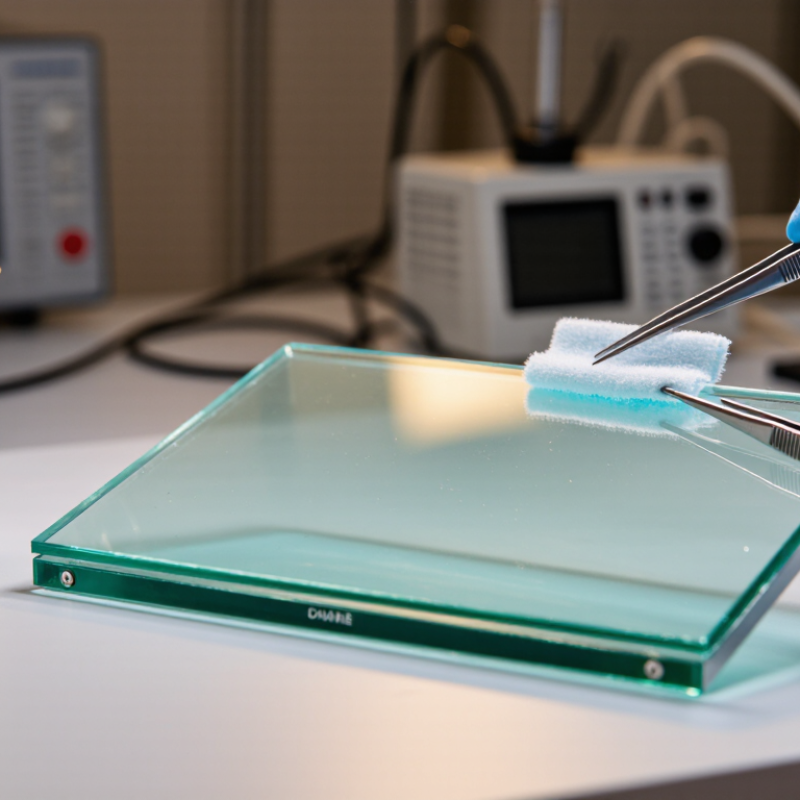
Safe cleaning begins after power isolation and cooling. Remove loose dust with clean, oil-free air. Wear powder-free gloves, then use optical tissue and a manufacturer-approved solvent. Wipe in one direction, using light pressure. Never use paper towels, abrasive cloths, or household glass cleaner. Small scratches can scatter laser energy. Do not polish them away. Replace the window when cracks, haze, coating lift, or permanent stains appear. I would inspect it before every shift, although this can be missed during busy production. Cleaning improves visibility, not protection.
| Window Material / Type | Common Laser Wavelength Range | Typical Visible Light Transmission | Main Strength | Important Limitation | Recommended Cleaning Method |
|---|---|---|---|---|---|
| Polycarbonate protective window | Usually selected for ultraviolet, visible, or near-infrared laser protection according to the certified filter design | Approximately 30%–70%, depending on tint, filter construction, and required optical density | High impact resistance and low weight | More vulnerable to scratches, solvents, and excessive heat than glass | Remove loose dust with clean air; wipe gently with distilled water and a pH-neutral detergent using a soft, lint-free cloth |
| Acrylic protective window | Commonly used for selected ultraviolet, visible, and near-infrared applications when specified by the filter manufacturer | Approximately 40%–85%, depending on the filter and tint | Lightweight, economical, and easy to fabricate | Lower scratch and impact performance than many polycarbonate designs | Use only a non-abrasive cleaner approved for acrylic; never use dry paper towels or abrasive pads |
| Optical glass protective window | Available for many ultraviolet, visible, and infrared laser bands, subject to the certified coating or absorbing filter | Approximately 20%–90%, depending on substrate, coating, tint, and optical density | Good surface hardness, dimensional stability, and optical clarity | Heavier and more susceptible to breakage from impact | Blow off dust first, then clean with reagent-grade or distilled water and a clean optical wipe; avoid circular rubbing when particles remain |
| Fused-silica window with certified laser coating | Often used for selected ultraviolet, visible, and near-infrared laser systems where high optical stability is required | Often above 90% in an unfiltered visible optical range; protective-filter transmission depends on the coating design | Excellent ultraviolet transmission and low thermal expansion | Higher cost and limited impact resistance; coating damage can reduce protection | Use clean, oil-free air followed by approved optical cleaning fluid and lens tissue; do not use household glass cleaner unless explicitly approved |
| Absorptive laser-filter window | Designed for a specified wavelength band, such as ultraviolet, visible, or near-infrared radiation | Typically lower than clear optical windows because the material absorbs selected laser energy | Protection is less dependent on a thin surface coating | The filter can heat up under high irradiance and must be matched to the laser power and exposure duration | Clean only after the laser is disabled and the surface has cooled; use a soft cloth and a compatible neutral cleaner |
| Evaluation Dimension | What to Verify | Practical Requirement |
|---|---|---|
| Laser wavelength | The exact wavelength or wavelength range covered by the protective window | Do not select a window based only on color or appearance; the spectral protection range must match the laser source |
| Optical density | The certified OD value at the operating wavelength | Higher OD means lower transmitted power; the required value depends on laser output, beam size, exposure time, and the applicable safety assessment |
| Protective standard | Test documentation against a relevant laser-protection standard, such as EN 207 or EN 208 where applicable | Check the wavelength band, operating mode, power or energy rating, and test markings rather than relying on a general marketing description |
| Surface condition | Scratches, cracks, coating marks, cloudiness, discoloration, or burn spots | Remove the window from service if damage may affect visibility, structural integrity, or certified laser protection |
| Cleaning frequency | The amount of dust, smoke, oil, coolant mist, or process residue present | Clean when contamination affects visibility or optical performance; excessive wiping can create scratches |
| Safe cleaning sequence | Laser off, power isolated, surface cooled, loose particles removed, then wet cleaning performed | Never clean a window while the laser is operating or while hot residue remains on the surface |
| Materials to avoid | Abrasive powders, rough paper towels, unapproved solvents, ammonia-based cleaners, and contaminated cloths | Use only cleaning materials compatible with the specific substrate and coating |
Safety note: A protective window should be selected from its certified wavelength, optical-density, power-handling, and test information. Cleaning does not restore protection after damage, coating failure, or exposure beyond the rated operating conditions.
Confirm the system is fully shut down. Remove the ignition key and wait for stored energy to discharge. Follow the written safety procedure, not memory. Verify the window’s wavelength range and optical density match the laser system.
Stop if you find cracks, cloudiness, burn marks, loose frames, scratches, or coating damage. Color changes are serious. Isolate the window and request qualified inspection.
Wear the specified protective equipment and clean, powder-free gloves. Prepare an air bulb, distilled water, and optical-grade lint-free wipes. Keep ventilation active and control nearby dust.
Use an air bulb first. Never drag a dry cloth across the surface. One grain of dust can create a scratch.
Lightly moisten a fresh wipe with distilled water. Make one straight pass, then replace the wipe. For oily marks, use only a compatible neutral-pH optical detergent.
Avoid household sprays, abrasive powders, paper towels, ammonia, and unverified alcohol mixtures. Do not spray liquid directly onto the window. Coatings can become hazy quickly.
Examine both faces under bright, indirect white light. Rotate the window slowly and inspect the bevel and coating. Look for haze, streaks, chips, stains, and fingerprints.
No. A window may look clean while its coating is damaged. Use approved equipment and documented procedures to check transmission. If uncertain, isolate it. “Looks fine” is not enough.
Store it in a clean, dry cabinet with stable temperature and humidity. Use a lint-free sleeve or dedicated case. Keep coated surfaces away from foam, paper, tools, and other optics.
Record the inspection date, cleaner used, operator, visible defects, and technician qualification. Check storage packaging periodically for dust, moisture, or compression marks. Records help, but they cannot replace a fresh inspection.
China’s best laser protective windows are selected for reliable wavelength protection, optical clarity, durable coatings, and suitability for the specific laser system. Before cleaning, switch off and isolate the laser, confirm that no beam or reflected energy can reach the work area, and check the window for cracks, burns, delamination, or loose mounting. Anyone performing maintenance should follow the equipment’s safety procedures and use appropriate protective equipment.
To understand how to clean laser protective windows safely, first remove loose dust with clean, oil-free air or a soft optical brush. Then use a lint-free optical wipe lightly moistened with approved lens-cleaning solution or purified water. Wipe gently in one direction without pressing, scrubbing, or reusing contaminated tissue. Avoid abrasive materials, household cleaners, solvents, and excessive liquid near the frame. After cleaning, inspect the surface under suitable lighting for streaks, particles, coating damage, or distortion. Store the dry window in a clean protective case, separated from hard objects, moisture, dust, and direct sunlight.

 Zico Machine