How Does a Fiber Laser Cutter Work for Global Buyers?

Time:2026-09-29 Author:Madeline
0%

Understanding how does a fiber laser cutter work begins with the light source, not the cutting table. Semiconductor diodes pump energy into a rare-earth-doped optical fiber. The fiber amplifies that energy into a concentrated laser beam. Mirrors and lenses then guide the beam through a cutting head. At the material surface, the beam creates intense heat within a tiny kerf. Assist gas removes molten metal and helps maintain a clean edge.

Dr. Valentin Gapontsev, founder of IPG Photonics, described fiber lasers as “a disruptive technology.” His observation reflects their industrial impact. Unlike many older laser systems, fiber lasers usually need fewer optical adjustments. They also deliver high electrical efficiency, stable beam quality, and strong uptime. A CNC controller moves the cutting head along programmed paths, often across steel, aluminum, copper, or brass sheets.

Market evidence supports this shift. Grand View Research reports continued growth in the global laser cutting machine market, driven by automation, automotive production, and metal fabrication. Fortune Business Insights also identifies fiber lasers as a major growth segment within industrial laser technology. These reports use different market definitions, so their figures should not be compared blindly. That distinction is often missed.

For global buyers, the practical question is not simply how does a fiber laser cutter work. It is whether the machine matches thickness, material reflectivity, power demand, gas availability, and local service capacity. A 6-kilowatt system may cut thick steel quickly, yet waste energy on light-gauge work. More power is not always better. The real evaluation begins with samples, measured cycle times, edge quality, maintenance records, and operator experience. Even this approach is imperfect, because factory conditions rarely match a showroom demonstration.
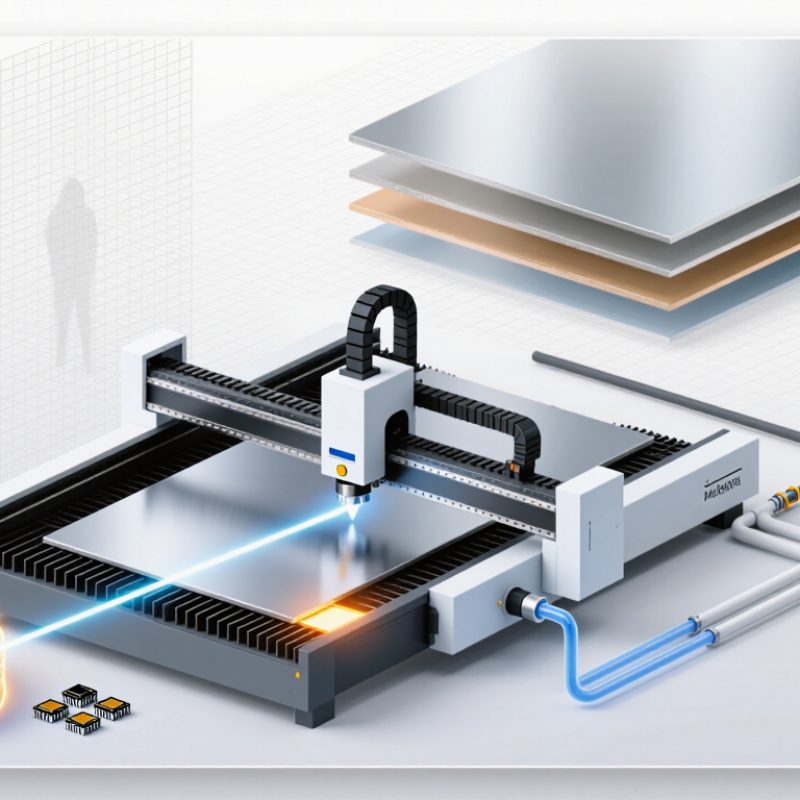
How Does a Fiber Laser Cutter Work for Global Buyers?

What Is a Fiber Laser Cutter and What Does It Process?

A fiber laser cutter is a CNC machine that converts electrical energy into a concentrated light beam. The beam travels through an optical fiber, usually activated with ytterbium, and reaches the cutting head at about 1,070 nanometers. A focusing lens creates an intense spot, often smaller than 0.1 millimeter. Assist gas then pushes molten metal away from the kerf.

It processes carbon steel, stainless steel, aluminum, brass, copper, and some reflective alloys. Typical work includes sheet cutting, tube cutting, profiles, brackets, electrical cabinets, and vehicle components. Thickness depends on laser power, material grade, gas pressure, and required edge quality. A 2024 report from MarketsandMarkets identifies metal fabrication as a major application area and forecasts strong growth for industrial fiber lasers through 2029. The report also links demand to automated production and shorter manufacturing cycles.

In practice, the picture is less tidy. A high-power source does not guarantee a clean cut. Nozzle alignment, lens contamination, and unstable gas flow can quickly mark an otherwise precise edge. Data from the International Federation of Robotics shows continuing growth in industrial robot installations, supporting wider adoption of automated cutting cells. Still, automation requires skilled setup. That assumption can fail. Operators must test pierce delay, focal position, and heat distortion for each material batch. My practical view is simple: fiber cutting excels when speed, repeatability, and low thermal distortion matter, but process discipline remains decisive.

How the Fiber Laser Source Generates and Delivers the Beam

How Does a Fiber Laser Cutter Work for Global Buyers?

How the Fiber Laser Source Generates and Delivers the Beam

Inside a fiber laser source, electrical energy powers semiconductor diodes. Their light pumps a thin optical fiber doped with rare-earth ions, commonly ytterbium. These ions release amplified light as they return to a lower energy state. Reflective fiber gratings keep the light circulating and build a concentrated beam. The output is typically near 1.06 micrometers, a wavelength absorbed effectively by many metals. The beam then travels through a delivery fiber to the cutting head, where lenses focus it onto a small spot. Assist gas removes molten material from the kerf. Small differences in focus can change edge quality; real workshops make this look less tidy than diagrams suggest.

Optech Consulting’s 2023 market review placed fiber lasers at roughly half of global industrial laser revenues. That market signal helps explain their broad adoption, but it does not guarantee a suitable machine for every buyer. Check rated power, beam quality, duty cycle, and service support. Ask for cutting samples in your actual material and thickness. A high power rating alone may not deliver a clean edge.

Tips: Confirm the source’s wavelength and fiber-cable limits. Keep connectors clean, and follow the supplier’s inspection schedule. A small speck of dust can damage an optical connection.

How Does a Fiber Laser Cutter Work for Global Buyers? - How the Fiber Laser Source Generates and Delivers the Beam

Stage or Parameter What Happens Typical Details What Buyers Should Check
Pump diodes Electrical energy powers semiconductor diodes, which provide pump light to the laser system. The pump light is commonly coupled into the active fiber through optical components. Ask about electrical input requirements, cooling, and service access for the source.
Gain medium Pump energy excites ytterbium ions in a doped optical fiber. The fiber amplifies light by stimulated emission. Ytterbium-doped fiber is widely used in industrial cutting sources. Confirm the source’s rated output power and operating conditions, rather than relying on peak figures alone.
Seed and amplification A low-power seed signal establishes the beam. Fiber amplifier stages raise its power while retaining its optical characteristics. Many industrial sources use a master-oscillator power-amplifier arrangement. Request beam-quality and stability specifications at the intended operating power.
Wavelength The source produces near-infrared laser light that is directed to the cutting head. Industrial ytterbium fiber lasers commonly operate around 1.06–1.08 µm. Check that the source, delivery cable, optics, and safety equipment are designed for the specified wavelength.
Power range Source output power determines the available energy for melting or vaporizing material during cutting. Industrial sheet-metal systems are available across a broad range, commonly from about 1 kW to 20 kW or more. Choose power based on material, thickness, cut quality, production rate, and the machine’s full system rating.
Beam delivery fiber A protected optical fiber carries the laser beam from the source to the cutting head. The cable has a specified core size, connector, length, and minimum bend radius. Verify cable compatibility, routing limits, connector cleanliness requirements, and replacement arrangements.
Cutting head optics Collimating and focusing optics concentrate the beam onto the workpiece; assist gas helps remove molten material from the kerf. The focal position, nozzle, and process settings affect the cut and vary with the material and thickness. Check supported power, lens and nozzle availability, focus control, and recommended maintenance intervals.
Beam quality Beam quality describes how tightly a beam can be focused and influences energy concentration at the cutting point. It may be specified using beam parameter product or M²; results depend on the source and measurement method. Compare like-for-like test conditions and request written specifications for the complete optical path.
Cooling and protection Thermal management and protective systems help keep the source within its operating limits and detect faults. Industrial systems typically require specified cooling conditions and environmental limits. Confirm coolant requirements, ambient-temperature limits, alarms, and local support before installation.
Safety and compliance The invisible near-infrared beam can cause serious eye and skin injury. Enclosures, interlocks, and appropriate procedures reduce exposure risk. Requirements depend on the machine design, installation, and destination market. Review applicable laser-safety standards, machine documentation, guarding, and operator training for the target country.

Figures shown are typical industry reference ranges, not guaranteed specifications. Actual performance and requirements depend on the laser source, machine configuration, material, and process settings.

How the Cutting Head Focuses the Laser on Metal

For global buyers, the cutting head is where a fiber laser’s energy becomes a controlled cut. The laser travels through a fiber-optic cable, then enters the head’s collimating and focusing optics. These lenses concentrate the beam into a small spot on the metal. NIST spectral reference data places common ytterbium-fiber laser output near 1.06 micrometers, a wavelength absorbed effectively by many metals. That helps explain why fiber systems can cut reflective materials more readily than some longer-wavelength sources. It is not a guarantee of clean edges.

Inside the head, assist gas flows through a nozzle around the beam. Oxygen can support cutting through oxidation; nitrogen can help produce cleaner edges on stainless steel. The focal position matters. Set it too high or too low, and the kerf may widen, edges may become rough, or dross may cling underneath. A workshop check is simple: inspect the nozzle for spatter, confirm the protective window is clean, and test focus on a sample of the actual sheet. Small faults show up fast.

The American Welding Society’s technical guidance on laser processing describes beam focus, material, and process settings as interdependent variables. In practice, thickness, surface condition, and gas pressure all affect the result. A cutting head with capacitive height sensing can follow slight sheet unevenness, but it cannot fix a warped plate or poor calibration. I have seen operators trust the screen too quickly. A short test cut still tells a more honest story.

How a Fiber Laser Cutter Focuses the Beam on Metal

The cutting head’s focusing lens converges the laser beam to its smallest spot at the focal plane. Moving above or below that plane enlarges the spot, reducing energy concentration. The curve is an illustrative Gaussian-beam model, assuming a 100 μm beam waist and a 2 mm Rayleigh range; actual values depend on the laser and optics.

How CNC Controls Guide the Cutting Process Step by Step

A fiber laser cutter turns a digital part design into a sequence of controlled movements. The CNC controller reads the cutting program, including paths, feed rates, and laser commands. Before cutting, the operator checks the sheet position and sets the work origin. A small origin error can shift every feature, so this check matters.

The controller moves the cutting head to the programmed start point. It then helps maintain the set distance between the nozzle and metal surface using height sensing. The laser pierces the sheet, and assist gas clears molten material from the cut. Once the pierce is complete, the head follows the programmed contour. At tight corners, the controller may adjust speed and laser output to limit excess heat. The details depend on material, thickness, and machine settings.

During the job, sensors and alarms can flag issues such as lost height tracking or interrupted gas flow. They help, but they do not replace a careful setup. A clean-looking program can still produce rough edges if the nozzle is worn or the sheet is uneven. That part is easy to underestimate. Operators often review the first cut, measure a feature, and adjust settings before running a full sheet. The controller guides each move; practical checks keep the process grounded.

What Global Buyers Should Compare Before Choosing a Machine

A fiber laser cutter turns electrical energy into a concentrated beam inside an optical fiber. The beam travels through a cutting head, where a lens focuses it onto sheet metal. Assist gas clears molten material from the kerf. In production, cut quality depends on more than laser power. Nozzle condition, focus position, gas pressure, and sheet cleanliness all matter. Small setup errors show up as rough edges.

Global buyers should compare usable work area, material thickness range, cutting speed at specified thicknesses, and accuracy—not headline wattage alone. Ask suppliers for test cuts using your own steel or aluminum grades. Request measured cycle times, edge photos, and power consumption under defined conditions.

The International Energy Agency’s Electricity 2024 report says global electricity demand grew 2.2% in 2023, making local energy tariffs an important operating-cost variable. Check the chiller, extraction system, and standby load too. They count.

Service access deserves equal scrutiny. Compare warranty terms, spare-part lead times, remote diagnostics, and technician coverage in your region. The World Steel Association reported 1.89 billion tonnes of crude steel production in 2023, underscoring the scale of metalworking demand, but it does not predict your shop’s workload. Ask for references from users cutting similar materials and shift patterns. A neat demonstration is not your factory floor. I would also verify whether quoted productivity includes loading, unloading, and changeovers; those minutes are easy to overlook.

FAQS

How does a fiber laser cutting head cut metal?

The beam travels through an optical fiber and enters focusing lenses. The lenses create a tiny spot on the metal surface. Assist gas removes molten material from the cut. The process looks precise, but clean edges are not guaranteed.

Why does focal position matter during cutting?

Incorrect focus can widen the kerf and create rough edges. Dross may also cling beneath the sheet. Operators should test focus on the actual material. Small faults matter.

What should operators inspect before cutting?

Check the nozzle for spatter and inspect the protective window. Confirm the gas supply and sheet position. Use a short test cut on the same metal grade. Test it.

How does CNC control guide the cutting head?

The controller reads the cutting program and follows programmed paths. It controls movement, feed rates, piercing, and laser commands. Height sensing helps maintain the nozzle distance. The controller guides movement, not every result.

What happens during piercing and contour cutting?

The head moves to the start point and pierces the sheet. Assist gas clears molten material from the opening. The head then follows the programmed contour. Tight corners may require lower speed or laser output.

Can sensors solve every cutting problem?

No. Sensors can detect lost height tracking or interrupted gas flow. They cannot correct a warped plate, worn nozzle, or poor calibration. I may trust the screen too quickly. A physical test remains useful.

What should global buyers compare when choosing a machine?

Compare work area, material thickness, cutting speed, accuracy, and energy use. Do not compare headline power alone. Request test cuts using your own steel or aluminum. Ask for measured cycle times and edge photographs.

Which operating costs are easy to overlook?

Check electricity, cooling, extraction, standby load, and assist gas consumption. Include loading, unloading, and changeover time. These minutes reduce real productivity. The quoted speed may look better than production reality.

How should buyers evaluate after-sales support?

Review warranty terms, spare-part lead times, remote diagnostics, and local technician coverage. Ask for references from similar workshops. A polished demonstration can hide practical weaknesses. I would verify everything twice.

Conclusion

This article explains how does a fiber laser cutter work, from creating a concentrated beam to producing accurate cuts in metal. It describes how the fiber laser source generates light and delivers it through an optical fiber to the cutting head. There, a focusing lens concentrates the beam on the material, while an assist gas helps clear molten metal from the cut. The machine’s CNC system follows programmed instructions, coordinating movement, speed, and cutting parameters to guide the head along the desired path.

For global buyers, understanding each stage can make machine comparisons more practical. The article outlines factors to consider, including the types and thicknesses of metal a machine can process, laser power, cutting accuracy, automation and control features, operating requirements, and ongoing support. These considerations help buyers assess whether a machine’s capabilities match their production needs and working environment.

Madeline

Madeline

Madeline is a dedicated marketing professional with a wealth of expertise in our company's core offerings. With a keen understanding of the industry, she brings a unique perspective to her role, consistently delivering high-quality content that highlights the superior aspects of our products. As......