Choosing the right laser cleaning power is essential for effective results. The laser's power directly influences the cleaning process, affecting both efficiency and surface damage. Renowned laser cleaning expert Dr. Emily Chen emphasizes this importance: "Selecting the appropriate power setting can make or break your cleaning project."
Laser cleaning involves precision. The wrong power can lead to incomplete cleaning or damage to the underlying material. For example, metals like aluminum require lower power settings to prevent etching. In contrast, rusted surfaces often need higher power to achieve complete removal. This highlights the necessity of understanding how to choose the right laser cleaning power for each unique application.
In practice, many users face challenges. They might select a power level relying on instinct rather than guidelines. This lack of strategic decision-making can result in wasted time or resources. Nevertheless, learning from past experiences and adjusting power settings accordingly can significantly enhance cleaning performance. It is a balancing act that demands attention and expertise.
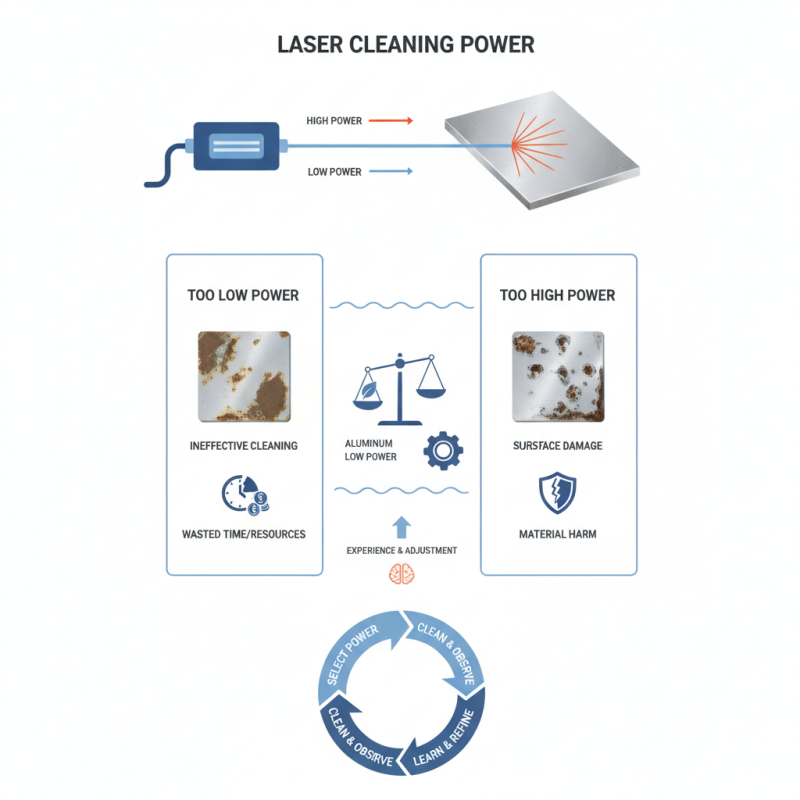
Choosing the right laser power is vital for effective cleaning applications. Laser power determines how efficiently contaminants, such as rust or coatings, are removed from surfaces. Insufficient power may lead to incomplete cleaning, while excessive power risks damaging underlying materials. Striking a balance is crucial for optimal results.
Different cleaning tasks require distinct power settings. For example, delicate surfaces may need lower power to avoid harm. Conversely, heavy-duty applications can tolerate higher energy levels. Knowing the material and contamination type can guide power selection. Operators must consider these factors carefully. This understanding is essential for achieving the desired outcome.
Real-world scenarios often highlight challenges in power selection. An operator may choose a higher power than needed, resulting in surface burns. Alternatively, using too low a power might leave residues behind. Each error leads to increased costs and time delays. These issues emphasize the importance of experience and expertise in laser cleaning.
| Application | Recommended Laser Power (Watts) | Material Type | Cleaning Efficiency (%) |
|---|---|---|---|
| Rust Removal | 100 | Steel | 85 |
| Paint Stripping | 150 | Aluminum | 90 |
| Graffiti Removal | 120 | Brick | 88 |
| Surface Preparation | 200 | Composite | 92 |
| Dirt Removal | 80 | Plastic | 75 |
Choosing the right laser cleaning power is essential for achieving desired outcomes. Various factors come into play when making this decision. Understanding the surface material is paramount. Different materials, like metals or plastics, require distinct power settings. For instance, too high power on delicate surfaces can cause damage. It's essential to strike a balance between effective cleaning and preserving material integrity.
Additionally, the type of contaminants influences power selection. Heavy rust or coatings often need higher energy settings, while light dust might require minimal power. The laser's wavelength is another critical factor. Certain wavelengths penetrate deeper into specific materials, enhancing cleaning efficiency. However, improper selection can lead to incomplete removal or excessive wear.
Experience is invaluable in this field. Many professionals advocate for trial and error to find the optimal settings for unique situations. A laser's inherent characteristics, such as pulse duration, can also complicate power selection. Together, these elements create a complex landscape. Proper training can help reduce the learning curve and improve outcomes. It's vital to remain adaptable, as no single approach works for every scenario.
Selecting the appropriate laser power is vital for effective material removal. The power of the laser directly influences how quickly and efficiently surfaces are cleaned. A recent industry report suggests that increasing the power by just 10% can enhance the removal rate by 30%. This correlation indicates that laser power is a critical element in optimizing cleaning processes.
Different materials respond uniquely to varying laser powers. For instance, metals require higher power settings to achieve effective removal without damaging the substrate. Conversely, softer materials may suffer degradation if the power is too high. An optimal range of 200 to 500 watts is often suggested for most applications, but monitoring is essential. A single miscalculation can lead to ineffective cleaning or material damage.
Moreover, considerations like the laser's pulse duration and wavelength can complicate the decision. Higher power isn't always better; you can end up with a rough finish. A balance between power and precision is necessary for best results. Data indicates that a meticulous approach can yield efficiency improvements of up to 20% over unchecked processes. The nuances of laser cleaning highlight the importance of informed choices and continuous improvement.
This chart illustrates the relationship between laser power and material removal rates. As the laser power increases, the material removal rate improves significantly, demonstrating the importance of selecting the right laser power for effective cleaning operations.
Selecting the correct laser cleaning power is critical in achieving optimal results in various industries. Industry standards emphasize the importance of matching laser power to the specific cleaning task. Optimum power levels vary based on material types, contamination levels, and desired outcomes. According to a report by the International Journal of Advanced Manufacturing Technology, inappropriate power settings can lead to surface damage or inadequate cleaning.
The American National Standards Institute (ANSI) suggests specific power ranges for different applications. For instance, a typical range for rust removal may be 100 to 300 watts, while delicate materials might require below 100 watts. Using excessive power can result in collateral damage. Studies indicate that 30% of cleaning failures stem from improper power selection. Therefore, adhering to established best practices is vital.
Moreover, ensuring that operators are trained in power selection enhances safety and efficiency. Operators often underestimate the impact of power adjustments. Engaging with technical data can bridge this knowledge gap. Industry professionals suggest utilizing test samples to refine power settings before full-scale operations. This approach mitigates risks and promotes better outcomes in laser cleaning applications.
Laser cleaning technology has proven its worth across various industries. The choice of laser power can greatly impact the effectiveness of cleaning operations. For example, in the manufacturing sector, high-powered lasers excel at removing heavy rust and industrial residues. However, they can also damage sensitive surfaces if not calibrated correctly. A case study involving a metal fabricator revealed that an improper power setting led to surface pitting. This situation emphasized the need for precise power selection to avoid costly mistakes.
In the restoration industry, the power of the laser plays a crucial role when cleaning historical artifacts. A lower power setting was successful in removing dirt from delicate stone sculptures without causing harm. Conversely, a higher setting was effective in dealing with tough grime on metal statues. These outcomes illustrate how tailored power settings are necessary for different substrate materials. Each case raises the question: How can industries better match laser settings to material needs?
The exploration of laser power choices reveals a delicate balance. Selecting the right power level requires a nuanced understanding of both the material and the desired outcome. Ongoing training and assessments can help avoid issues like surface damage. As industries integrate laser technology more widely, the importance of expertise in power selection becomes increasingly evident.
: It ensures effective cleaning of contaminants while preventing damage to underlying surfaces.
Insufficient power can leave residues, leading to incomplete cleaning tasks.
High power levels may cause surface burns or damage the material being cleaned.
A 10% increase in power can boost the removal rate by 30%, enhancing cleaning efficiency.
No, different materials require varying power settings to avoid degradation or damage.
For most applications, 200 to 500 watts is often recommended, but monitoring is essential.
Factors like pulse duration and wavelength can influence power selection and results.
Proper training helps operators understand power impacts and enhance safety and efficiency.
Studies show that 30% of failures arise from improper power selection during cleaning tasks.
Using test samples can help fine-tune power settings before full-scale operations commence.
Choosing the right laser cleaning power is essential for achieving optimal results in various cleaning applications. Understanding the nuances of laser power can significantly influence the effectiveness of material removal. Factors such as substrate type, contamination level, and desired cleaning speed all play critical roles in determining the ideal laser power selection.
Moreover, the impact of laser power extends to operational efficiency and cost-effectiveness, shaping industry standards and best practices. By examining case studies across diverse sectors, we can glean insights into how to choose the right laser cleaning power to enhance performance and ensure desired outcomes. Ultimately, this understanding equips users to make informed decisions that align with their specific cleaning requirements.
